
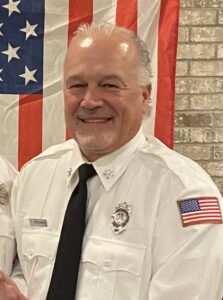
 For nearly four decades, Tim Seehusen has served his community through the Olivia Fire Department. What began as childhood curiosity of chasing sirens has led him to a long-term commitment to helping others in need.
When Seehusen joined the fire service in 1989, it was highly competitive. “There were five or six people applying for two spots,” he recalled. “I was fortunate to be one of the ones chosen.”
From day one, he was hooked by the camaraderie and sense of purpose. He rose through the ranks and served as Olivia’s chief for 15 years, and he is currently assistant chief.
Over the years, Seehusen has noticed dramatic changes in training, technology and tactics. He sees younger firefighters learning new methods and acknowledges they are often improvements over older practices.
“One of the biggest challenges for me is not getting stuck in my ways,” he says. “You have to listen to the younger firefighters.”
The weight of the calls
The Olivia Fire Department responds to around 50 calls per year, many of them serious vehicle accidents along nearby highways. For the 40 volunteer firefighters in the department, the emotional impact of responding to these calls can take a toll, especially over the long term.
“People see things they were never meant to see,” said Seehusen.
For years, like many in the fire service, Seehusen admitted to carrying those experiences quietly, but that changed after responding to a tragic car accident involving local teenagers. He left the scene ready to hang up his gear for good.
Recognizing the need for mental health support
Not long after the accident, Seehusen attended a critical incident debriefing for those who were involved in the emergency response. Despite initially thinking he was fine, he walked out of the debrief feeling so much better. The experience was an eye-opener and made him recognize the cumulative impact of trauma.
“You might not have PTSD,” he explained. “But you can still have a stress injury. You remember every call. Every detail. That stays with you.”
Knowing his department needed more support in this area, Seehusen connected with MnFIRE to bring in training on cancer awareness, cardiac health and emotional wellness.
“The [emotional wellness] training really hit home,” he said. “It helped us understand what we’re carrying – and that it’s okay to talk about it.”
Becoming a resource for others
That turning point ultimately led Seehusen to become a chaplain within his department. His goal was – and still is – to make it easier for firefighters to reach out for help.
“Sometimes people just need that first conversation,” he said. “Someone they trust, someone close.”
But he’s also clear about his limits. “I can only go so far. At some point, you need professional support and that’s what MnFIRE can provide,” stressed Seehusen.
MnFIRE offers all active Minnesota firefighters access to a specialized network of mental health providers trained in trauma response, and up to five no-cost counseling sessions per issue, per year.
Breaking the stigma
“No matter how small the issue feels, reach out,” Seehusen said. “It’s confidential. It’s professional. And it’s there for you.”
Firefighters and their families can call the MnFIRE helpline 24/7 at 888-784-6634 for support.
Seehusen emphasizes that taking care of yourself isn’t just personal – it affects the entire team. “If you’re not well, the people around you aren’t well either,” he said.
The next generation
A few years ago, Seehusen decided to step aside to make room for the next generation to start leading the department. While still actively involved, he’s enjoying seeing the younger firefighters take more responsibility and chart the department in a new direction.
He knows how fulfilling and hard life in the fire service can be, so he’s grateful more firefighters are taking advantage of the resources available to prioritize their physical and mental health for a more fulfilling experience in the fire service.
Schedule a no-cost training for your department
Through the Hometown Heroes Assistance Program, MnFIRE offers trainings dedicated to the three health problems most commonly experienced by those in the fire service: cardiac, emotional trauma and cancer. These trainings, along with other deep-dive sessions, are available to all Minnesota fire departments at no cost, and satisfies the annual wellness training requirement for public employers as defined in Minnesota Statute 299A.465, the public safety law which guarantees continued employer‑paid health insurance for firefighters and peace officers who are duty‑disabled by job‑related injuries.
Click here to learn more and register for a MnFIRE training.